

A return path for the shopper.
Send a configured email or SMS that brings an unfinished cart back to checkout. The customer returns to complete the purchase in their own session.

A payment decline, an abandoned cart and a failed recurring charge should not all trigger the same action.
Send a configured email or SMS that brings an unfinished cart back to checkout. The customer returns to complete the purchase in their own session.
Choose a fixed or percentage discount, minimum cart value and link validity. Keep the recovery offer specific to the follow-up you want to send.
Configure delays, channel settings, quiet hours and timezone. Use an email touch ladder when one reminder is not the follow-up strategy you need.
Inspect sends, provider responses, delivery states and skip reasons. Follow the carts that later paid instead of judging recovery only by messages sent.
Use decline rules for payment continuation, reminders for abandoned carts and recurring retry profiles for scheduled billing. Each has a different trigger and customer context.
A follow-up message invites the shopper back; it does not initiate another charge.
Configure email and SMS independently. Decide when a message is useful, whether a discount belongs in it and how long the return link should remain valid.
Minimum cart values and quiet hours keep the campaign aligned with your operating choices.
Read the provider result, delivery state and eventual order outcome together. Investigate skipped messages and unsuccessful sends before changing the offer.
Reporting connects recovery activity to carts that subsequently complete payment.
Bring the shopper back to a clear purchase experience, with timing and incentives your team can understand and adjust.
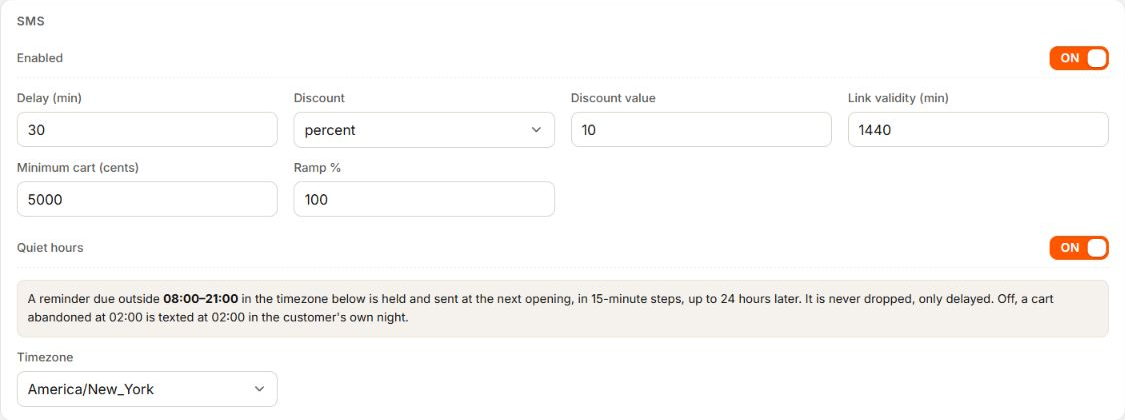
Set channel enable, delay, minimum cart and rollout percentage independently.
Choose a fixed or percentage discount and return-link validity.
Configure quiet hours, timezone and an email touch ladder.
Review provider, template, delivery result, errors, skipped sends and recovered sales.
Choose the channel, message and return offer.
Set timing, quiet hours and cart eligibility.
Track follow-up and whether the cart returns to payment.
Yes. Each channel has its own enable, delay, discount, link-validity and cart controls. Email also supports a touch ladder.
Subscription retry profiles act on recurring charges. Cart recovery sends a message and return link so the customer can continue checkout.
Yes. Choose a fixed or percentage discount and configure the return-link validity.
Configure quiet hours and timezone settings. Email recovery also supports a touch ladder for follow-up timing.
Recovery records show the provider, template, delivery result, errors and skipped sends.
Review recovered sales alongside the cart and follow-up records. A delivered message and a completed purchase are different outcomes.
Eligibility follows the configured channel, delay, minimum cart and rollout settings, together with the current cart state.
Choose the channel, message and return offer, define timing and eligibility, then inspect delivery records and returned paid carts.

Let’s connect your checkout, payments and recurring revenue.
See what your operation could look like.