Plans with an explicit next step.
Configure a simple interval or advanced introductory stages. Review the dates and amounts before the plan is offered.

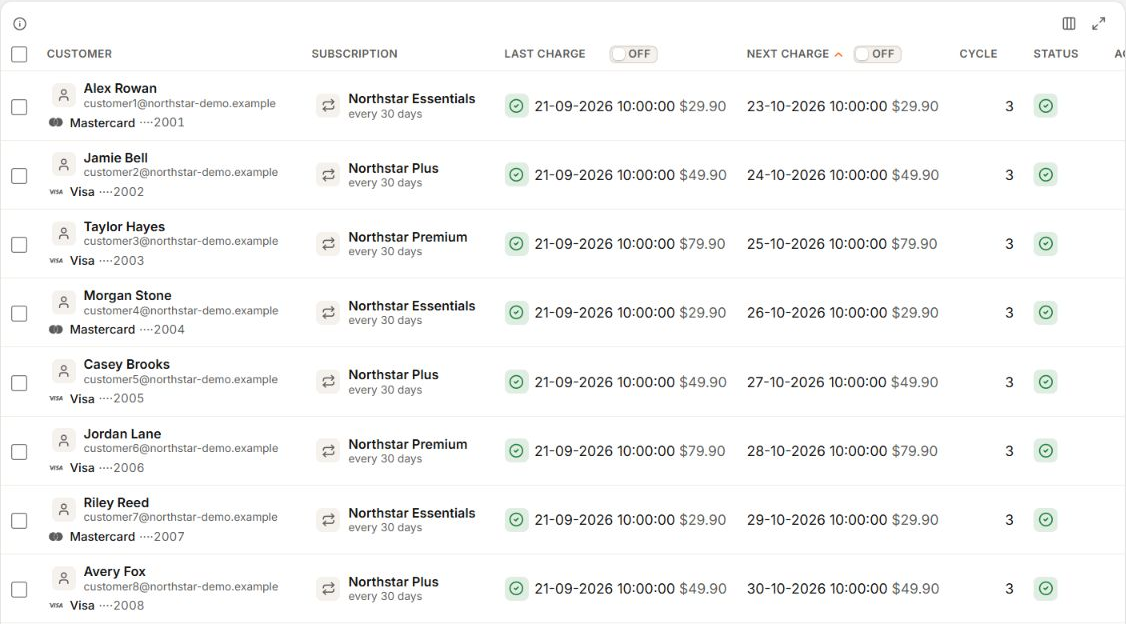
Bring the plan customers selected, the charges ahead and the results of previous cycles into one relationship.
Configure a simple interval or advanced introductory stages. Review the dates and amounts before the plan is offered.
Show price, interval and first-charge timing beside the customer’s selection. Keep the chosen terms with the order.
Review daily charges, pause or resume subscriptions and manage selected entries. Keep collection aligned with the lifecycle state.
Compare actual price points, product revenue and cycle retention. See where performance changes beyond the recurring revenue total.
Use the plan simulation to inspect twelve charges, including introductory stages and delays. Align the checkout disclosure with that schedule.
The offer customers see should describe the billing plan the operation will run.
Review charges ahead and apply the appropriate routing constraints and retry profile. Treat a customer pause differently from a failed payment.
Lifecycle actions and payment outcomes remain distinct parts of the relationship.
Read membership, churn and revenue by product. Compare price points and cycle outcomes before changing the plan or collection settings.
Use the details behind recurring revenue to choose the next operational change.
Connect enrollment, schedules, payment policy and retention reporting so the team can work on the stage that needs attention.
Yes. Advanced plans support a sequence of introductory amounts and delays before the recurring phase, within the plan builder's limits.
Yes. Pause controls retain the subscription and its history. Schedule and individual-subscription actions have their own defined effects.
Yes. Account-scoped admin endpoints expose supported product, subscription and schedule operations.
Show price, interval and first-charge timing beside the customer’s selection. Keep the chosen terms with the order.
Review daily charges, pause or resume subscriptions and manage selected entries. Keep collection aligned with the lifecycle state.
Compare actual price points, product revenue and cycle retention. See where performance changes beyond the recurring revenue total.
Use the plan simulation to inspect twelve charges, including introductory stages and delays. Align the checkout disclosure with that schedule. The offer customers see should describe the billing plan the operation will run.
Review charges ahead and apply the appropriate routing constraints and retry profile. Treat a customer pause differently from a failed payment. Lifecycle actions and payment outcomes remain distinct parts of the relationship.

Let’s connect your checkout, payments and recurring revenue.
See what your operation could look like.