

Present the actual purchase.
Build checkout around the product, price and order summary. Control the content and layout that customers see before payment.

Organise the purchase flow around the products, markets and processing relationships your business already serves.
Build checkout around the product, price and order summary. Control the content and layout that customers see before payment.
Use supported merchant accounts with allocation shares and capacity checks. Keep the processing decision explicit for the team.
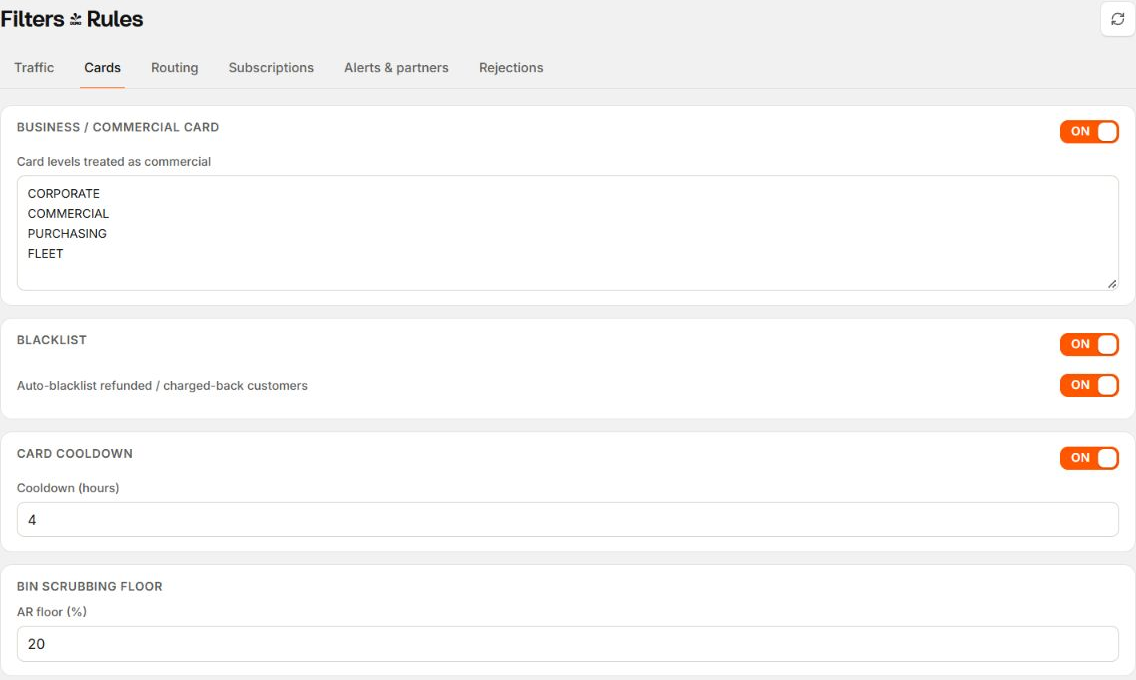
Apply configured card rules and authentication. Inspect whether the payment stopped because of your policy or a gateway response.
Follow the original transaction into supported alert and refund handling. Review the actual outcome of the action, including failures.
Use the store and checkout tools for product presentation and order details. Review the mobile experience with the same care as the desktop page.
Your specialist systems retain their age-verification, product restriction and delivery responsibilities.
Configure supported accounts, routing pools and authentication profiles. Record the decision so operators can understand selected and skipped accounts.
The routing policy works within the processing relationships configured for the business.
Read payment history, refunds and supported dispute alerts together. Use the actual transaction context when deciding how to respond.
A received alert and a completed refund remain separate statuses.
Give your team a consistent view from the configured purchase experience through routing, transaction history and follow-up.
No. 3D Secure is a cardholder-authentication workflow. Any required age or product-eligibility checks must be handled by the appropriate systems.
Build checkout around the product, price and order summary. Control the content and layout that customers see before payment.
Use supported merchant accounts with allocation shares and capacity checks. Keep the processing decision explicit for the team.
Apply configured card rules and authentication. Inspect whether the payment stopped because of your policy or a gateway response.
Follow the original transaction into supported alert and refund handling. Review the actual outcome of the action, including failures.
Use the store and checkout tools for product presentation and order details. Review the mobile experience with the same care as the desktop page. Your specialist systems retain their age-verification, product restriction and delivery responsibilities.
Configure supported accounts, routing pools and authentication profiles. Record the decision so operators can understand selected and skipped accounts. The routing policy works within the processing relationships configured for the business.
Read payment history, refunds and supported dispute alerts together. Use the actual transaction context when deciding how to respond. A received alert and a completed refund remain separate statuses.

Let’s connect your checkout, payments and recurring revenue.
See what your operation could look like.