

A product offer with room for detail.
Present the product, price and order summary in a branded checkout. Keep recurring terms visible where a subscription is offered.

Keep a clear customer offer connected to deliberate payment settings and transaction follow-up.
Present the product, price and order summary in a branded checkout. Keep recurring terms visible where a subscription is offered.
Group the supported merchant accounts serving the business. Set weights and capacity instead of sending every payment to one destination.
Use reusable card and country profiles where the payment policy requires them. Connect the provider and browser result to the payment.
Review refunds and supported dispute alerts alongside the transaction. Give the team the purchase record needed to investigate an issue.
Build the store and checkout around the product being sold. Use optional add-ons and subscription terms only where they belong in that offer.
The visual builder controls product content, order summary and customer choices.
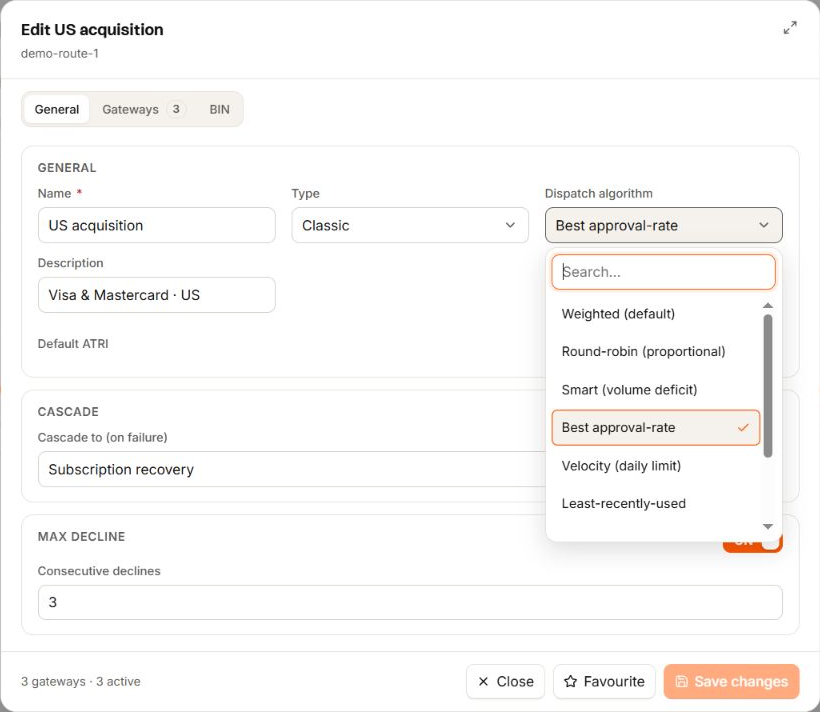
Choose the accounts, route and capacity rules that serve the operation. Attach card and authentication profiles to the relevant pools.
Provider and product acceptance are established with your processing partners.
Use transaction history, refunds and supported alert matching to investigate customer payment issues. Read the result by store, product or account.
The operational context stays connected to the original approved or declined payment.
Connect the branded purchase experience to the accounts and policies your team uses, with visibility into the payment and its follow-up.
No. Merchant acceptance, products, markets and payment methods must be confirmed with the relevant providers. The demo reviews the commerce setup around that approved scope.
Present the product, price and order summary in a branded checkout. Keep recurring terms visible where a subscription is offered.
Group the supported merchant accounts serving the business. Set weights and capacity instead of sending every payment to one destination.
Use reusable card and country profiles where the payment policy requires them. Connect the provider and browser result to the payment.
Review refunds and supported dispute alerts alongside the transaction. Give the team the purchase record needed to investigate an issue.
Build the store and checkout around the product being sold. Use optional add-ons and subscription terms only where they belong in that offer. The visual builder controls product content, order summary and customer choices.
Choose the accounts, route and capacity rules that serve the operation. Attach card and authentication profiles to the relevant pools. Provider and product acceptance are established with your processing partners.
Use transaction history, refunds and supported alert matching to investigate customer payment issues. Read the result by store, product or account. The operational context stays connected to the original approved or declined payment.

Let’s connect your checkout, payments and recurring revenue.
See what your operation could look like.